
What Comes After Investor Attention? A GTM Analysis of Scale, Raven and Metrifox


VC attention can put a startup on the radar, but it does not turn interest into customers. Growth still depends on whether buyers understand the product, find it when they search for a solution and see enough value to act.
That gap made me look more closely at Condia’s list of ten Nigerian startups to watch in the second half of 2026. I chose Scale, Raven and Metrifox because each represents a different GTM challenge. Scale is bringing a mobility-finance proposition to market. Raven is organising a financial ecosystem that serves several audiences. Metrifox is introducing an infrastructure category to AI and SaaS companies.
I analysed their websites and search data to understand how they communicate value, capture demand and create room for growth. I do not have access to their customer research, internal priorities, acquisition data or GTM strategy, so these observations are hypotheses they can test rather than final judgments.
Dive in
Scale
Why Scale is worth watching
What the current story gets right
Where the market story could become clearer
The discovery opportunity
Three moves that could strengthen Scale’s GTM
Raven
Why Raven is worth watching
What the current story gets right
The discovery opportunity
Three moves that could strengthen Raven’s GTM
Metrifox
Why Metrifox is worth watching
What the current story gets right
Where the market story could become clearer
The discovery opportunity
Three moves that could strengthen Metrifox's GTM
Scale GTM analysis
Why Scale is worth watching
Scale grew out of Renda, giving it direct knowledge of the cash-flow and operational problems that take drivers and fleets off the road.
It fuses credit, fuel, repairs, vehicle services and spending tools in one platform while using operational data to assess risk and manage repayment.
That synthesis gives Scale strong potential because it solves an urgent problem, serves both drivers and fleet businesses and builds its lending model around how customers use the money.
What the current story gets right
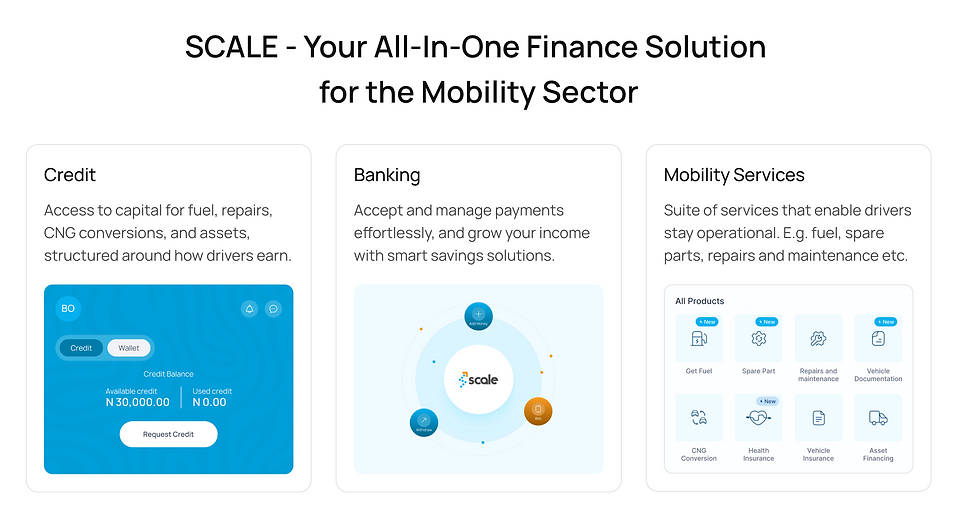
Scale’s homepage presents credit, banking and mobility services as its three core pillars. The surrounding copy connects them to reduced downtime and increased earnings.
The individual page makes the product tangible. Instead of discussing finance in abstract terms, it shows drivers using Scale for fuel, repairs, vehicle documentation, insurance, asset financing and CNG conversion. The business page extends the proposition to fleet operators through wallet funding, expense visibility and service access.
The testimonials support that story, with several users like Austin and Ejike describing how they repaired a vehicle or accessed fuel without paying everything upfront. Across these stories, we see Scale solving a time-sensitive operational problem.

Where the market story could become clearer
The homepage opens with “Powering Mobility, Fueling Growth” and describes Scale as an “all-in-one mobility platform.” The phrase captures the breadth of the product, but it does not tell a new visitor what Scale helps them do. “Mobility platform” could mean fleet software, vehicle leasing, logistics infrastructure or ride-hailing technology.
The supporting copy explains that Scale combines credit, banking and vehicle services, yet the commercial outcome still sits beneath the product description. The stronger story is that Scale helps drivers and fleet operators keep vehicles active, protect income and reduce downtime when fuel costs, repairs or cash-flow gaps threaten operations.
Scale also serves two buyers with different priorities. Drivers need fast access to fuel, repairs and credit. Fleet operators need working capital, spending controls, service coverage and operational visibility. Scale can keep both audiences within one platform, but each needs a distinct path from the homepage.
The discovery opportunity
Scale’s messaging maps to terms such as “mobility platform,” “mobility banking” and “finance solution for the mobility sector.” These phrases describe the business, but they may not reflect how customers search for help.
A driver may search for:
Car repair loans in Nigeria
Fuel credit for drivers
Loans for ride-hailing drivers
CNG conversion financing
Vehicle documentation support
A fleet operator may search for:
Fleet financing in Nigeria
Working capital for logistics companies
Fuel credit for fleet businesses
Fleet expense management
How to reduce vehicle downtime

The Ahrefs snapshot I reviewed showed no visible organic keyword or traffic footprint and no detected presence across major AI-search platforms. That data does not tell the whole story, especially for a young company. However, it shows that Scale has translated little of its product breadth into discoverable commercial content.
When someone asks Google or ChatGPT how to finance urgent vehicle repairs in Nigeria, Scale needs a page that answers the question. That page should explain who qualifies, how the process works, what repayment looks like and why Scale understands the problem.
A general platform description gives search engines and LLMs less material to work with.
Three moves that could strengthen Scale’s GTM
1. Lead with the outcome Scale delivers
Scale should replace broad language such as “all-in-one mobility platform” with a message that tells customers why the product matters.
Keep every vehicle earning
Access credit, fuel, repairs and essential vehicle services without letting cash-flow gaps take you off the road.
This gives drivers and fleet operators a reason to care before introducing the product categories.
2. Create separate journeys for drivers and fleet operators
Scale should direct each audience to a landing page built around its needs.
The driver journey should focus on fast access to fuel, repairs and vehicle services, with a clear Check eligibility action.
The fleet journey should focus on working capital, spending controls, reporting and reduced downtime, with a Request a fleet assessment action.

3. Build pages for the three highest-intent problems
Scale should start with:
Fuel credit for commercial drivers
Vehicle repair financing in Nigeria
Working capital for fleet and logistics companies
Each page should explain eligibility, what Scale covers, how repayment works, how long approval takes and what the customer should do next.
Raven GTM Analysis
Why Raven is worth watching
Raven is a centralized dashboard for managing different bank accounts. The company’s website reports 700,000 registered users, more than ₦5.1 trillion in value processed and two million monthly transactions.
Its product portfolio includes transfers, bill payments, savings, cards and credit for individuals. Businesses can use subaccounts, team cards, savings, invoicing, payroll and merchant-payment products. Raven also offers enterprise products such as TapCredit, Partners Console and Atlas.
The breadth impresses. It also creates a difficult GTM question: how does Raven explain all of that without making the company feel fragmented?
What the current story gets right
Raven has a strong brand platform. “Move Africa” gives the company a larger story than a collection of financial features.
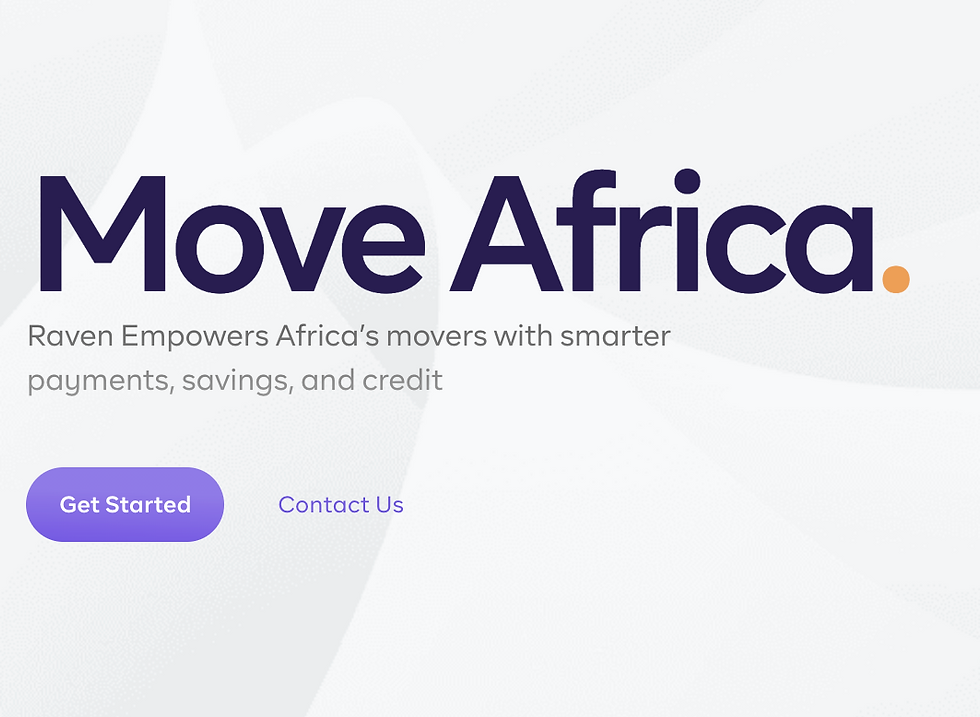
The website supports the brand with meaningful proof. The transaction volume, user numbers and product range show that Raven has reached a significant level of adoption.
Many product pages make the use cases clear. The subaccounts page shows businesses how to separate funds across departments and projects. The business-card page focuses on employee spending controls and transaction visibility. The BankBox page explains how businesses can use a portable device to accept contactless payments. The TapCredit page shows how organisations can give employees access to credit.

Raven has created dedicated pages for these many products, giving it a useful foundation for product education, sales conversations and search visibility.
Raven does not need more things to say. It needs to organise what it has.
Where the market story could become clearer
The homepage introduces Raven as a platform for payments, savings and credit. Further down, Raven describes the company as infrastructure for micropayments and lending. Other pages refer to Raven as a digital bank, a financial ecosystem and a business-finance platform.
These descriptions reflect parts of the company, but they do not form a clear hierarchy.
A student looking for a virtual card has a different problem from a finance manager issuing cards to employees. A small merchant evaluating BankBox has another set of questions. An enterprise considering TapCredit needs to understand eligibility, implementation, repayment and risk.
The website asks these audiences to navigate one large product universe.
Some product pages also contain inconsistencies. Raven describes TapCredit with different interest rates and salary limits. Its placement under personal banking implies that individuals may access it on their own, while the FAQ suggests that registered employers must provide access. Some pages contain duplicated sections or headings carried over from other products.
These issues often emerge when a product portfolio expands and teams launch at speed. They make sense, but they matter more in financial services, where buyers pay close attention to fees, limits, eligibility and regulatory language.
Raven’s next phase of GTM should include stronger product-information governance and clearer audience segmentation.
The discovery opportunity
Raven has more search authority than Scale or Metrifox.

The Ahrefs snapshot showed a domain rating of 37, 366 referring domains and 460 backlinks. It also showed 14 organic keywords and about 110 estimated monthly visits.
Thirteen of those keywords appeared in the top three positions. This may suggest that Raven performs well for branded or specific queries while broader product searches generate less visibility.
The company has products that could map to larger areas of demand:
Virtual cards for international payments
Business bank accounts in Nigeria
Team expense-management software
Employee spending cards
QR payment solutions
Contactless payment terminals
Salary advances and employee credit
Business subaccounts
Merchant-management infrastructure
Raven’s product names need descriptive category language beside them.
A buyer who has never heard of the company will not search for BankBox or TapCredit.
They may search for a portable POS alternative, employee-credit programme, salary advance platform or merchant terminal management system.
The branded name can remain, but category description helps the customer, search engine and LLMs understand when Raven belongs in the conversation.
Three moves that could strengthen Raven’s GTM
1. Organise the ecosystem around three audiences
Raven could structure the homepage around three paths:
Personal banking
Business and merchant finance
Enterprise infrastructure
Each path should explain the outcome before listing the products. For individuals, Raven helps people send, spend, save and access credit. For businesses, it helps teams collect payments, manage spending and organise their finances. For enterprises, it provides employee-credit and merchant infrastructure.
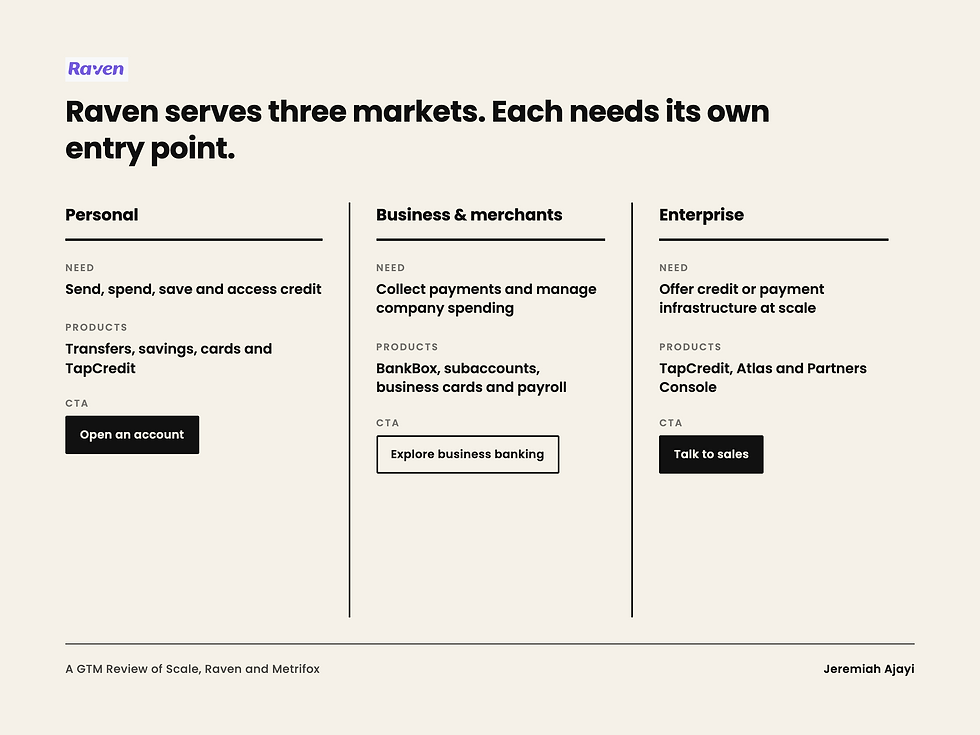
That structure would connect the ecosystem and reduce the amount of information each visitor must process when visiting the website.
2. Create a single source of truth for every product
Raven should review its product claims across landing pages, FAQs, help-centre content, sales decks and onboarding materials.
The company should keep interest rates, limits, fees, eligibility rules and regulatory descriptions consistent. This matters for savings and credit products, where a small discrepancy can create doubt.
Raven should also remove duplicated modules and ensure that each page contains information tied to that product.
3. Turn the blog into a commercial discovery engine
Raven publishes often, but the content could do more to lead readers towards products.
An article about failed international transactions should direct readers to Global Cards. Content about employee financial stress should connect to TapCredit. Tax explainers should lead to the Tax Clinic. Expense-management articles should point businesses towards cards and subaccounts.
This would help Raven capture demand from ideal customers searching for answers to their pain points.
Metrifox GTM Analysis
Why Metrifox is worth watching
AI products create costs with every prompt, model call and workflow, which makes flat subscriptions and manual billing harder to sustain. Companies need to know what customers can access, how much each action costs and when usage should trigger a charge, limit or upgrade.
Metrifox brings pricing, entitlements, usage controls and billing into one system. It helps product teams launch new packages, engineers remove monetisation logic from the codebase, finance teams protect margins and growth teams identify expansion signals.
That gives Metrifox a strong chance of succeeding because it addresses an urgent problem that cuts across several teams, ties its value to revenue and margins and becomes harder to replace once a company embeds it into its product.
What the current story gets right
Metrifox explains the problem before introducing the product. The homepage shows how pricing logic trapped in code slows launches, creates engineering work, hides expansion signals and exposes margins.

The supporting pages then connect each problem to a specific capability. The credits page explains how AI companies package complex usage. The runtime page shows why teams need to control consumption before costs accumulate. The product and engineering pages show how Metrifox removes pricing and entitlement logic from development sprints.
Metrifox also addresses Stripe Billing, Orb and Metronome because buyers will compare it with tools in their stack. That gives the company a strong foundation for category education and sales.
Where the market story could become clearer
Metrifox uses several strong terms—monetisation infrastructure, pricing layer, runtime control, entitlements and billing—but the volume of concepts may slow a first-time buyer down. The site needs one familiar category anchor, such as “monetisation infrastructure for AI and usage-based products,” then a simple explanation of how pricing, entitlements, usage control and billing fit together.
Its outcome-based pricing also needs more clarity. Buyers may not know what counts as an outcome or how usage translates into cost. Three concrete pricing examples for an AI startup, a developer platform and an enterprise SaaS company would make the model easier to assess.
The discovery opportunity
Metrifox has built detailed product pages, but its search footprint does not reflect that effort.
The Ahrefs snapshot showed no organic keywords, no estimated organic traffic and a domain rating of 0.5. It also showed two ChatGPT responses from one page, with no detected visibility across the other AI-search platforms in the report.

For a young company, time may explain part of this. Search engines need to crawl the site and develop confidence in the domain. Technical indexation issues may also contribute. The Metrifox team should investigate those issues before blaming the content.
The larger opportunity sits in the language. Terms such as “runtime consumption control,” “monetisation intelligence” and “confirmed business outcomes” help Metrifox create a distinct category narrative. Buyers may search for:
AI billing platforms
Usage-based billing software
Credit systems for AI products
Entitlement management
Stripe Billing alternatives
How to price AI agents
How to control LLM costs
How to prevent usage from destroying margins
Metrifox needs content that connects those searches to the deeper problem it solves.
That approach allows the company to capture existing demand while teaching the market a more sophisticated way to understand the category.
Three moves that could strengthen Metrifox’s GTM
1. Choose one category and repeat it everywhere
Metrifox should describe itself the same way across the homepage, product pages, documentation, social profiles and directory listings:
Metrifox is monetisation infrastructure for AI and usage-based products, combining pricing, entitlements, consumption control and billing in one runtime.
This gives buyers a clear category before introducing concepts such as runtime enforcement and monetisation intelligence.
2. Build content around problems buyers already search for
Metrifox should create pages for high-intent questions such as:
AI usage metering versus runtime enforcement
How to price AI agents without hurting margins
Credit-based pricing versus usage-based billing
Metrifox versus Stripe Billing
Entitlements versus feature flags
Building billing infrastructure versus buying it

Each page should explain the problem, compare the options and lead readers to the relevant Metrifox product page or demo.
3. Replace anonymous testimonials with detailed case studies
Metrifox should turn its strongest customer results into case studies that name the company, buyer, previous setup, implementation process and commercial outcome.
For example, one case study could show how a customer reduced engineering work, another could show how runtime controls prevented margin loss and a third could show how Metrifox uncovered expansion revenue.
These assets would help sales answer objections, give search engines stronger proof and give AI platforms credible sources to cite.
A rocketship ahead
Scale, Raven and Metrifox have built products with clear potential. Their next growth opportunity lies in closing the gap between how they describe those products and how customers understand, search for and evaluate them.
GTM clarity affects whether the market can find a product, understand its value and take action. I help companies turn complex products into clear positioning, stronger buyer journeys and discoverable GTM systems. Here is how to reach me.


Comments